Today in Aviation History: After 9-11
Contributor: Barry Fetzer
Sources: Avbrief.com, Southwest Airlines
In my historical vignette yesterday, I related some of my own personal experiences with 9-11 and its succeeding days.
What were yours? Share them with family members and friends so we never forget.
Below are the recollections of a Southwest Airlines commercial pilot of getting back to business after September 11, 2001. Downloaded on September 13, 2026 from: https://avbrief.com/first-flight-into-san-diego-picking-up-the-pieces-after-9-11/?utm_source=newsletter-336&utm_medium=email
Picking Up the Pieces After 9/11
September 10, 2026
Updated: September 11, 2026
Southwest Airlines/First Flight Out
By Myron Nelson
On September 11, 2001, I was a relatively junior captain for Southwest Airlines. I wasn’t flying on that day as I had finished a trip late the night before. I was awakened that morning by one of my twin daughters telling me to turn on the television. I turned it on just as the second aircraft hit the south tower. Needless to say, I was stunned along with millions of people all over the world.
Later in the day, after being inundated with too much news, I first drove out to Sky Harbor and looped around the airport. I don’t really know why I did that other than trying to bring some sense of normalcy. It didn’t work. By early afternoon, KPHX, which normally bustled with activity, was essentially abandoned.
From Sky Harbor, I drove out to our neighborhood airport, Falcon Field, where I kept a private aircraft primarily used for my son to gain his ratings and flight time. In those days, there were no security fences/gates, and anyone could just drive out onto the ramp area. The day before, I had received a Service Bulletin from the airplane’s manufacturer, Socata. The SB detailed an issue with certain seat pans. The only way to determine applicability was to see if the bottom of the seat was metal or foam. I climbed awkwardly into the cockpit to get my head and shoulders down in the footwell to reach up under the seat and determine its type. While in this awkward position, I heard a couple of police cars come screeching to a stop adjacent to the airplane. When I extracted myself from the cabin, I was facing officers with their guns out, telling me to raise my hands and come down slowly from the airplane. We got it all sorted out and we all nervously laughed that none of us really knew what to do about what had just happened.
The first day that I was scheduled to fly, the trip was canceled as the national system was shut down. We were told to just stand by at home and wait for news from the company. On the morning of the first day that airlines were permitted to fly again, September 14th, I received a call from scheduling at about 4:00 a.m. asking me to come to the airport as soon as I could get there and they would have an assignment waiting when I checked in.
When I arrived at the airport, it was still dark outside, but the pilot lounge was full of anxious aviators. I checked in electronically, and my “board” (schedule) showed that I was to deadhead to Oakland through Reno. That flight was already boarding, so we hustled to the gate.
When we got to Reno, we just stayed on the airplane for the flight to Oakland. Skeds called and we were told that we would be flying a flight to Seattle, but to call when we landed in OAK. When we arrived in OAK, we were told that plans had changed and that we would be taking ground transportation (Van) from OAK across the bay to San Francisco, where we would be flying to San Diego.
When we arrived in SFO, we went to the gate and found the airplane waiting, empty, with no flight attendants present.
We called Skeds and were told that our flight attendants had missed their connection, so we were going to ferry the aircraft empty to San Diego. We were also told that SAN was short on fuel, so we would be “tankering” fuel to SAN. I remember that the airplane was brand new and still had the Boeing stamp in its logbook.
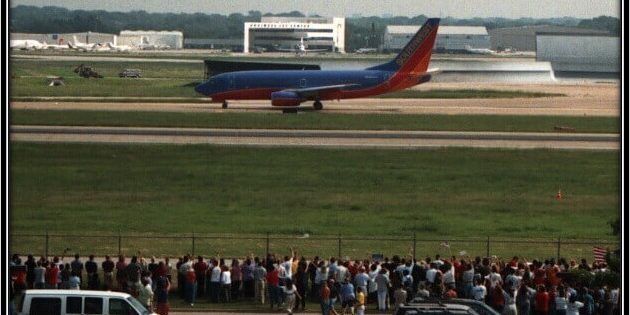
Getting close to SAN we were assigned a holding pattern. We had lots of fuel, so we really didn’t care. A stubborn marine layer had rolled in on SAN which was operating on Runway 9 because of winds, but the glideslope was out of service, so the localizer approach with its higher approach minimums was all that was available for use. At that present time, the ceiling was below minimums, but was reported to be slowly rising and expected to improve. Approach control asked us if we’d like to continue holding or attempt the approach. We elected to fly the approach, but at the missed approach point, we couldn’t see the runway, so we flew a missed approach procedure and came around for another attempt. Once we got above about 2,500 feet, it was bright and sunny on top. On the second try, we were able to see the runway and make a legal landing. Ground Control told us that we were the first aircraft to land at SAN after 9/11.
When we arrived at the terminal, the passengers who had been stranded for days were happy, and we were pleased to see that we had a proper contingent of flight attendants ready as well. Everything was a go for our flight to Nashville (BNA) where we imagined that we would be staying the night.
The flight to BNA took us over some of the most beautiful views of our great nation. Sights that under normal circumstances may seem routine, but on that day were extra spectacular.
While en route and chatting with the flight attendants, we discovered that they were based in Chicago and had been stranded during the entire time that air operations had been suspended. They were hoping to deadhead back to Chicago when we arrived at Nashville.
Arriving at Nashville, the passengers clapped and cheered so loudly that we could hear them up front in the cockpit. As they were deplaning, the ops agent informed the flight attendants that they would be working a flight to Detroit. One started crying, not because she didn’t want to help out, but because she didn’t have any backup plan for her two kids. She ended up making a quick call to the Salvation Army to pick up her kids and take them to their shelter, then she dutifully worked the flight as she was assigned to.
As we were packing up our stuff for what we thought would be a BNA overnight, we were informed by Skeds that we would be deadheading back to PHX because the goal was to get as many pilots in their home domiciles as possible. Because the flight was full with stranded passengers, we had to sit in the (uncomfortable) cockpit jump seats for the longish flight to PHX. Normal contractual and regulatory flight and duty day restrictions on pilots had been temporarily suspended. I walked into my home about 20 hours after I had left it.
I was glad to have a job and hoped that it would continue. Fortunately for me, it did. However, many others were not so lucky and have felt the effects of that tragic day ever since. For better or worse, the entire airline industry changed dramatically in the aftermath of that terrible day.
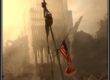
We must never forget the sacrifice of those who were injured and killed on that horrible day. The airline crews and passengers, the workers in the towers, and especially the first responders who ran dutifully towards danger, fully knowing what was at stake. They and the loved ones they left behind must never be forgotten.
About the author:
Myron Nelson has had a passion for aviation for as long as he can remember. He soloed at 16 and has been a professional pilot for over 35 years, having flown for Lake Powell Air, SkyWest Airlines, Southwest Airlines, and the Flying Samaritans. Myron retired from Southwest Airlines in 2020 and had the honor of having his son Riley serve as his First Officer on his retirement flight. In 2026, Myron was a recipient of the Wright Brothers Master Pilot Award for 50 years of active participation in aviation.
Onward and upward!
Sources: Avbrief.com, Southwest Airlines