In Five Days in Aviation History: Cleveland National Air Races
Contributor: Barry Fetzer
Sources: Wikipedia, YouTube
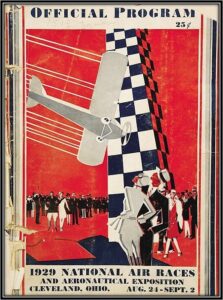
Courtesy of Wikipedia
In five days, we’ll note the anniversary of the first day of the 1929 National Air Races, held in Cleveland, Ohio.
I’m launching this historical vignette today, five days early, because I’m departing on a road trip from NC to northern Ohio to attend my 55th high school reunion.
On 24 August 1929 my dad was almost five years old (his birthday in late September of 1924). I was a little over 23 years from being a glimmer in good ol’ dad’s eyes and 24 from being born. In those intervening years between 1929 and my birth, dad grew up, graduated from high school, started college, met my mom, joined the US Army Air Corps, deployed to China, returned home, finished college, and married mom. Given his flying uncle living next door and his proximity to Cleveland (growing up in Bedford, Ohio), he may have attended the Cleveland Air Races as a kid. I wish I had queried him on that question (as well as many others) while he was alive.
The air races long over by my time, Dad took me as a kid to the air race’s successor, the Cleveland Air Show, perhaps sparking my own interest in aviation.
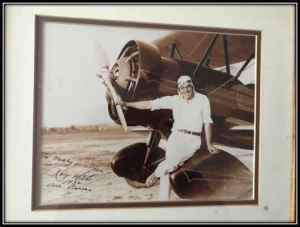
Great Uncle Ray Hill. Fetzer Family photo.
My great uncle (dad’s mom’s sister’s husband), Ray Hill living next door to dad, flew in those same national air races three years after their 1929 debut in 1932. Ray would go on to serve in the Army Air Corps during WWII just as his nephew—my dad—did. While dad was a teen-aged, enlisted weather forecaster during the war, Great Uncle Ray (in his 40’s) served as an officer in the Air Transport Command (ATC), the branch of the Army Air Corps that managed global strategic airlift, ferrying aircraft and transporting personnel, equipment, and medical supplies.
While both these men’s service was vital to America and the Allies winning the war, it may have been Great Uncle Ray’s air racing prior to WWII—and that of all the early air racers in the “golden age of aviation”—that had the greatest impact on winning the air war, perhaps even the war itself.
According to several sources, “air racing during the interwar years (1919–1939) heavily contributed to winning WWII by acting as a high-speed laboratory for critical aerodynamic, engine, and structural innovations that directly shaped wartime fighter planes.”
And those air races also included plenty of women along with the men, people (many of them quirky…and they had to be…and all of them courageous) who innovated and experimented and, yes risked—and in many cases, sacrificed—their lives in pursuit of higher, faster, stronger, more maneuverable, and better aircraft. Winning aircraft that arguably helped win the war.
Frankly, if we had had then what we have now: all the rules, regulations, policies, and laws…our “anti-quirky” attempts to press everyone into the same mold, and our risk-averse attitudes…well, who knows what would have happened.
See the YouTube video and “History with Hanna” here for more information on this golden age of aviation: https://www.youtube.com/watch?v=GTcErYxTtEg.
So, thank you Uncle Ray for your small part in advancing aviation and helping America build the tools needed for, and leading to, its ultimate victory in WWII.
Onward and upward!
Sources: Wikipedia, YouTube