Last Week in Aviation History: Commercially Viable Battery-Powered Flight?
Contributor: Barry Fetzer
Sources: AVBrief.com and Heart Aerospace
How did we get to mid-August already? “Time”, as they say, “flies”…as does the constant march of technological change.
How did we get to big, electric airplanes so quickly? Well, despite some of our disbelief (including my own) that we could actually get to commercial viability in battery-powered airliners, it appears that human ingenuity, grit, and improving battery technologies could actually get us there. Shame on me for doubting our resourcefulness, perseverance, and imagination that have led us to solving so many, seeming at least, insurmountable human challenges.
Below column downloaded from https://avbrief.com/regional-airliner-sized-electric-airplane-flies/?utm_source=newsletter-307&utm_medium=email on August 16, 2026.
Regional Airliner-Sized Electric Airplane Flies
August 13, 2026/ Updated: August 14, 2026
By Russ Niles
Heart Aerospace
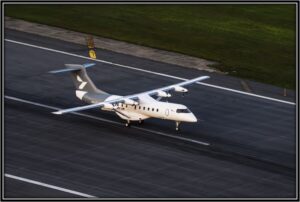
An electric airplane the size of a small regional airliner took its first flight last Wednesday, and the manufacturer says that in the taxi and 27 minutes it was airborne it used $5 worth of electricity. “With the first flight of X1, Heart Aerospace has demonstrated electric flight at the scale of a commercial airliner,” Heart Aerospace Founder and CEO Anders Forslund said in a statement. “Electric commercial aircraft have the potential to fundamentally reshape airline economics and, ultimately, lower the cost of air travel for passengers.” The L.A.-based company flew the aircraft over upstate New York. The plane that flew is a technology demonstrator and flew on battery power alone. The ultimate goal is to certify a 30-seat regional aircraft called the ES-30 with a hybrid electric system that the company says will cut operating costs by 40%.
In the short hop, which began and terminated at Heart’s flight test base at Plattsburgh, New York, the pilot flew the demonstrator to 1,100 feet to test the basic flight characteristics of the plane. The propulsion system put out more than a megawatt of power. “The mission was designed to demonstrate all-electric flight at a scale relevant to commercial airline operations,” the company said in a statement. Meanwhile the first type conforming aircraft is being built in L.A. and the company is seeking Part 25 certification. It’s predicting first flight in 2028 and entry to service in 2031.
That kind of savings has attracted the attention of United Airlines, Air Canada, and JSX who have all chipped in some development money, and the order book is said to be $9.4 billion. Air Canada Chief Financial Officer John Di Bert said its investment in in the ES-30 reflects Air Canada’s commitment to supporting innovative technologies that have the potential to transform aviation. United CFO Michael Leskinen said electric aircraft “have real potential to deliver a better travel experience for passengers while strengthening our business, and we look forward to Heart’s continued development of the ES-30 and its potential future role in United’s network.”
Onward and upward!
Sources: AVBrief.com and Heart Aerospace