Today in Aviation History: Forest Bird
Contributor: Barry Fetzer
Sources: Wikipedia, Goodfellow Historical Foundation, National Inventors Hall of Fame
Happy August aviation history enthusiasts. The “Dog Days” are upon us and school days too!
Do you read obituaries? Unless you’re over, say, 60 years of age, you probably don’t. Reading obits is, typically, in the realm of “old people” (like me) and not on the agenda for young people with much of their lives ahead of them (and busy lives at that…and lives without newspapers and therefore lives without obits).
You’d be smarter than me if you started taking a newspaper and reading obits sooner than I did.
A pretty good obit “joke” goes like this, “The first thing I do when I get up is grab the morning paper to see if I’m listed in the obits. If not, I know I can start the coffee and prepare my breakfast.”
Jokes aside, obits are worth reading if for no other reason than they are truly, great vehicles of humility. Not only are they humbling in that they remind us of our own mortality, but rarely do they fail (especially in my case) to, in less then a hundred words or so, describe the accomplishments of a person who lived a life that transcended anything I have done or hoped to do in my life.
So, let’s review just a small part of the obituary of Dr. Forest Bird. Today, (August 2) in 2015, Dr. Bird passed away. And a library of knowledge passed away with him.
From Wikipedia: “Bird was born in Stoughton, Massachusetts, became a pilot at an early age with his father’s encouragement, and by age 14 flew his first solo fight. By age 16 he was working to obtain multiple major pilot certifications. Bird enlisted in the United States Army Air Corps, and entered active duty in 1941 as a technical air training officer due to his advanced qualifications. This rank, combined with the onset of World War II, gave him the opportunity to pilot almost every aircraft in service, including early jet aircraft and helicopters. The newest models of aircraft were capable of exceeding altitudes at which humans can breathe, even with 100% oxygen supplementation, introducing the risk of hypoxia. Bird discovered that an oxygen regulator in a crashed German bomber he was ferrying to the U.S. for study seemed to contain a pressure breathing circuit. He took the oxygen regulator home, studied it, and made it more functional. It became the standard design for high-altitude oxygen regulators for most military aircraft until recent time.”
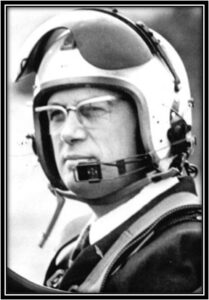
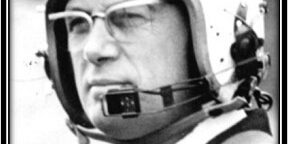
Dr. Bird. Courtesy National Inventors Hall of Fame
From the Goodfellow Historical Foundation: “In 1937 Forrest Bird met Orville Wright at the Cleveland Air Show. In 1955 – the “Bird Universal Medical Respirator” was released. In 1965 the first factory assembly line rolled out a medical respirator for home health, the Mark III. In 1967 Bird developed the “Bird Innovator”, a conversion of the Consolidated PBY Catalina amphibian aircraft. In 1971 Bird introduced first infant ventilator, the “Baby Bird.” In 1995 Dr. Bird was inducted into the National Inventors Hall of Fame. In 2007 Drs. Forrest and Pamela Bird opened the Bird Aviation Museum and Invention Center in Sagle, ID. In 2008 Dr. Bird received the Presidential Citizens Medal from President George W. Bush. In 2009 Dr. Bird received the National Medal of Technology and Innovation from President Barack Obama. In 2012 Dr. Bird was awarded the Charles Lindbergh Award.
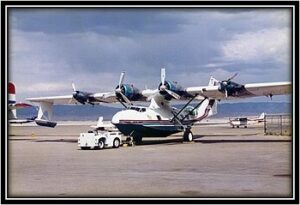
The “Bird Innovator”. Courtesy Wikipedia.
“Forrest Bird held four PhD degrees: medicine, aviation, physics, and biotechnology.”
So, when we might think we’re an “ace of the base”, we would be wise to think again.
Learn more about this amazing man here: https://wilfordhall.tricare.mil/News-Gallery/Articles/Article/4315829/a-historic-look-back-on-the-invention-of-the-bird-ventilator-by-forrest-bird and here: https://www.invent.org/inductees/forrest-m-bird
Onward and upward!
Sources: Wikipedia, Goodfellow Historical Foundation, National Inventors Hall of Fame