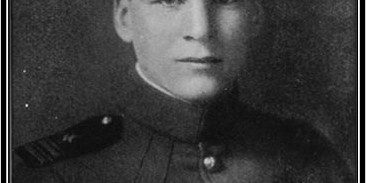
First and only WWI US Navy Ace
Contributor: Barry Fetzer
Sources: US Navy, US Army, Case Western Reserve University, Wikipedia
Speaking of roaring in like a lion (as opposed to bowing (baaaing?) out like a lamb as this month of March is purported to do, today in 1929—March 10, 1929 to be exact—David S. Ingalls, was appointed Assistant Secretary of the Navy for Aeronautics. But before being appointed as assistant secretary of the Navy, Ingalls was the 1st naval aviator Ace and the only WW I Navy Ace.
According to Case Western Reserve University and its Encyclopedia of Cleveland, Ohio History, “David S. Ingalls, Sr. (28 Jan 1899-26 Apr 1985), the U.S. Navy’s only WORLD WAR I flying ace, was born in Cleveland, Ohio to Albert and Jane (Taft) Ingalls. He enlisted in the 1st Yale Naval Aviation Unit when the war started. Ingalls graduated from Yale in 1920 and from Harvard University with a law degree in 1923.”
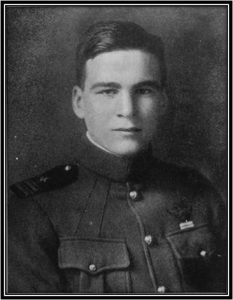
Photo of Ingalls courtesy of the United States Navy, Downloaded from http://www.history.navy.mil/photos/images/h49000/h49249.jpg.
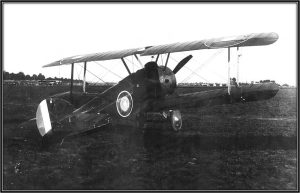
United States Army Air Service 1918 photograph of a Sopwith Camel
“In World War I Ingalls flew Sopwith Camels, shooting down 4 enemy planes and 3 aerial balloons, receiving the British Distinguished Flying Cross and U.S. Distinguished Service Medal. In 1929, President Hoover appointed him assistant secretary of the Navy for aeronautics. He returned to active duty in WORLD WAR II and in late 1942 was chief of staff for the Air Center. Commander Forward Area on Guadalcanal, awarded the Bronze Star and Legion of Merit. In 1983 he was inducted into the Natl. Aviation Hall of Fame. Ingalls married Louise Harkness in 1922; they had 5 children. He died in his Chagrin Falls home and was buried in Hot Springs, Va.”
According to Wikipedia, “Ingalls was attached to the British 213 Squadron and flew Sopwith Camels in attacks on German submarine bases. On August 11, 1918, Ingalls and his flight leader, Colin Peter Brown, shot down a German observation plane behind enemy lines. Two days later, he was involved in a surprise attack on a German aerodrome, which destroyed thirty-eight planes. On 21 August, Ingalls shared a win over an LVG two-seater with Brown and fellow ace George Stacey Hodson.
“On September 15, he destroyed a Rumpler in company with fellow ace Harry Smith. Three days later, he teamed with Smith and Hodson to become a balloon buster. Two days after that, Ingalls lost his engine and knew he had to crash land. As he was descending, he saw a woman sitting in a field smoking a pipe. He had never seen a woman smoking a pipe, so he tried to land in that field. Then his engine kicked back in and he was able to fly again. But by now he was well behind enemy lines. As a result, he was able to come at the Germans from behind and shot down a Fokker D.VII to become an ace. On a later attack on a German aerodrome, Ingalls destroyed more planes. On his way back to base on September 24, 1918, he spotted a German observation plane, which he and Hodson shot down. His last flight of the war came on October 3, 1918.”
Onward and upward!
Sources: US Navy, US Army, Case Western Reserve University, Wikipedia