A Month Ago in Aviation History: Space Junk Rule
Contributor: Barry Fetzer
Sources: Wikimedia, NASA, Avbrief.com
Space Junk Rule Put Off
https://avbrief.com/space-junk-rule-put-off/?utm_source=newsletter-160&utm_medium=email
Space junk a problem? Is this Chicken Little’s “the sky is falling” or a real issue?
I was driving to Highpoint NC a few years ago on I-73 on our way to visiting my wife’s eldest sister. We had just passed under an overpass when all of a sudden, our windshield “exploded”. We were both showered with windshield glass shards. We also were both, blessedly, wearing sunglasses so the small cuts on both our faces did not include cutting our eyes. The whole windshield had spider-web cracked from a central impact point, the inside ply of the windshield mostly shattered and free of glass. The windshield had remained basically intact with the plastic sheet between the two plies of glass still mostly holding onto the outside ply of fully cracked glass.
It did not appear that the item that hit us had broken completely through the windshield, but a small hole, about half an inch in diameter, was drilled through the windshield between the driver and passenger seats.
The first thing I did when I pulled off the freeway was look in my rearview mirror to see if someone was running away along that overpass who might had thrown something (a rock?) off that overpass we had just passed under. I saw no people on the overpass but I suppose someone could have thrown a rock or something else fairly heavy from a moving car up there and “got lucky” in hitting our windshield.
I walked back to about where I thought the location of the windshield explosion was to see if I could find anything on I-73 or along the side of the freeway that might resemble something that hit our windshield. A meteorite? A piece of space junk? TFOA (things falling off aircraft)? Even though it was summer and clear, Carolina Blue skies, a hailstone thrown from a distant thunderstorm? We checked the inside of the car, too, for a small projectile of some kind that might have caused the damage.
Nuts. No luck. Nada. Zip. Zilch. Nil. Naught. Zero. I found nothing that appeared as if it might have been the culprit.
So, like any good mechanic and doing my best “MacGyver” impression, I took my “tool chest in a roll” (duct tape…first cousin to “tool chest in a can” or WD-40) from the tool chest we keep in the back of our SUV and taped up the shattered window, leaving enough viewing space to safely drive so we could make it to my sister-in-law’s home. On the way my wife Arlene called our car insurance company who called Safelite to meet us at her sister’s home to replace our windshield so we could ultimately make it back home to Swansboro.
Could it have been space junk? I was hoping for a meteorite keepsake, but a space junk keepsake would have been fine too! So would a TFOA keepsake.
Anyway, I’m grateful we were not hurt and, other than a bit of inconvenience, a little money (since we keep high deductibles on our comprehensive car insurance), an extra day at my sister-in-law’s home, and few bloody spots on our faces, all’s well that ends well. And I’m thankful for mysteries. That mystery was never solved.
But as it turns out Chicken Little (running around scared like a chicken with his head cut off…yes that’s an intended pun), a fairy tale created long before space junk was even a thing, might ultimately have been right.

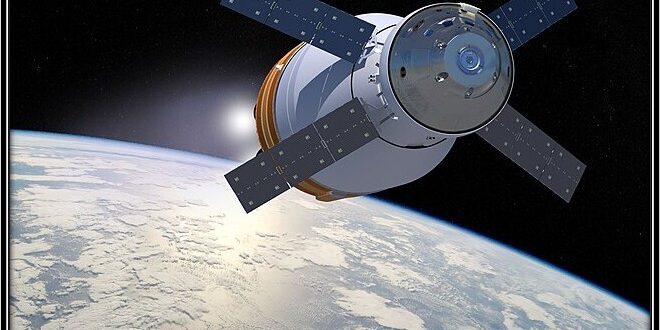
Wikimedia/NASA
According to Avbrief.com, downloaded in March from the above URL, “The federal government is backing off on rules that would require commercial space companies to clean up after themselves in space. It announced a month ago that it needs more time to gauge the impact of the law. “FAA intends to review the space launch industry cost inputs and expectations with respect to debris mitigation activities,’ the agency said. The rule was first proposed in 2023 by the Biden administration in response to the growing tempo of space launches and would have required the companies to safely deorbit debris, notably the upper stages of rockets used to deploy payloads in orbit, within 25 years of launch. The rule makers of the time said the various spent pieces of space hardware ‘pose a significant risk to people on the ground due to their mass and the uncertainty of where they will land.’
“According to ProPublica, no one has reportedly been killed or seriously injured by space rubble but there have been some close calls. A boy in China suffered a broken toe from falling space bits and a woman in Tulsa, Oklahoma, was hit on the shoulder by something from above. A Canadian researcher, whose study determined that there’s almost a 30% chance that someone will be killed by space debris in the next decade, is critical of the decision. ‘Instead of requiring companies to responsibly dispose of these upper stages, the U.S. has decided to roll the dice on a person or a plane getting hit by falling debris,’ said Ewan Wright, a Ph.D. candidate at the University of British Columbia.”
Onward and upward!
Sources: Wikimedia, NASA, Avbrief.com